Top 13 HR Software Picks for Medium-Sized Businesses (Q1 2026)
Compare 13 HR software platforms for mid-sized businesses in 2026: HiBob, Paycor, RallyBright, Lattice, Workday, and more. Pricing, features, tradeoffs.
By Alex Boyd
Compare 13 HR software platforms for mid-sized businesses in 2026: HiBob, Paycor, RallyBright, Lattice, Workday, and more. Pricing, features, tradeoffs.
Medium-sized businesses sit in an awkward middle ground for HR. You’re too large for entry-level tools designed for small teams, but not large enough to justify the cost, complexity, or overhead of enterprise HCM platforms. At this stage, HR decisions have a real downstream impact on retention, performance, and leadership effectiveness.
What matters most now isn’t just automating tasks; it’s choosing systems that support managers, surface meaningful people data, and adapt as the organization evolves. The wrong platform can slow teams down or lock HR into rigid processes, just as the business needs more flexibility.
This guide reviews 12 of the best HR software options for medium-sized businesses in 2026. Each product was evaluated based on how well it serves mid-market needs, including depth of functionality, ease of adoption, analytics, and support for hybrid and distributed workforces.
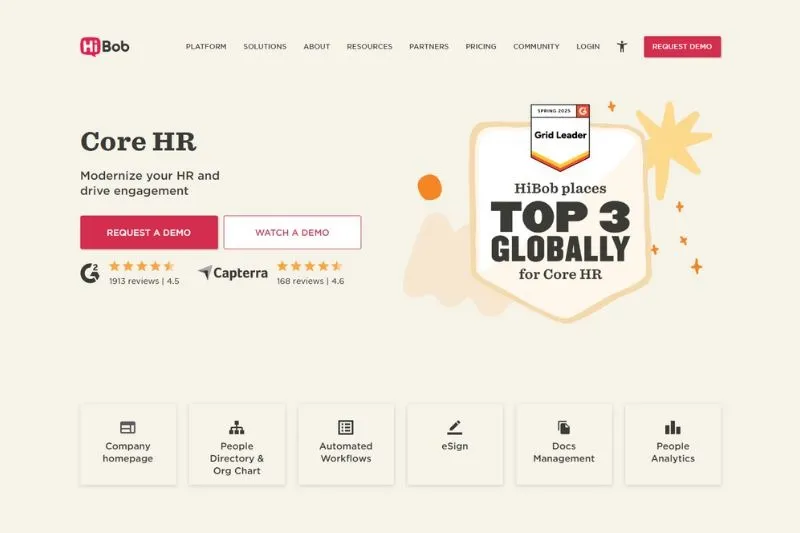
Best overall HR platform for scaling mid-market teams
Demos available
Pricing: Custom-based on company size and region
Rating: 4.9/5
HiBob is a modern HR platform built specifically for mid-sized organizations that want a people-first, analytics-driven system instead of a legacy HRIS. It brings together core HR, performance, engagement, org design, and culture tools in one intuitive platform that scales across locations and countries.
HiBob offers the strongest overall blend of configurability, user experience, analytics depth, and culture-building tools for medium-sized businesses. It feels modern and people-centric without sacrificing structure or control.
HiBob is ideal for medium-sized organizations that are scaling quickly, expanding across regions, or maturing their people programs. It’s especially well-suited to companies that want one platform to manage HR operations, performance, analytics, and culture in a cohesive way.
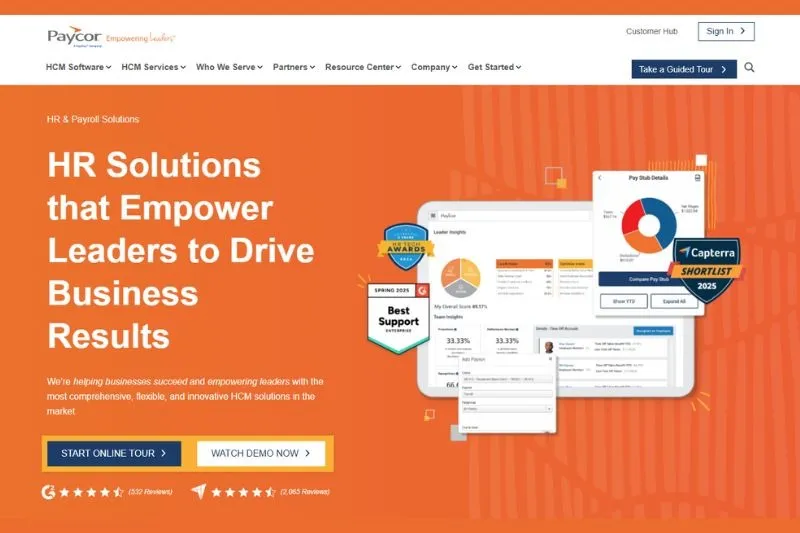
Best for performance and workforce insights
Demo available
Pricing: Custom, based on modules and headcount
Rating: 4.6/5
Paycor is a human capital management platform focused on giving HR and leaders visibility into workforce performance, engagement, and planning. It combines core HR data with analytics, performance tools, and manager-friendly dashboards.
Paycor made the list for its strong analytics and performance capabilities tailored to mid-market teams that want more insight into how their workforce is operating, not just a place to store HR data.
Paycor is well suited to medium-sized companies that want to go beyond basic HRIS functionality and gain better visibility into performance, trends, and workforce metrics while still keeping the system manageable.
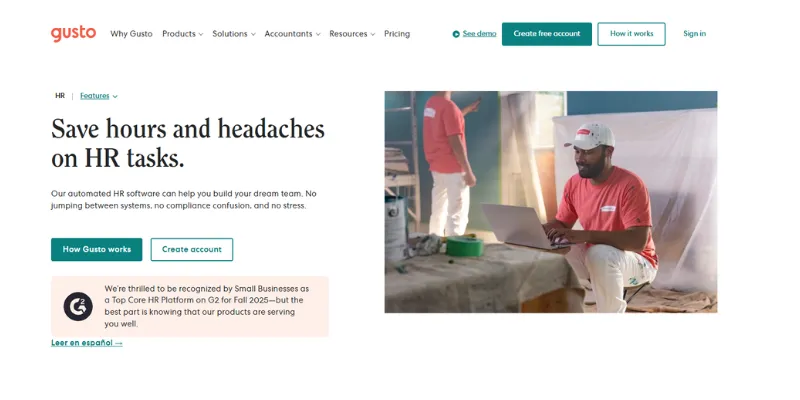
Best for simple HR needs with clear workflows
Demo available
Pricing: Tiered per-employee plans
Rating: 4.5/5
Gusto is widely known in the SMB space and has expanded to offer straightforward HR capabilities such as onboarding, employee records, time off, and basic performance workflows. It’s designed to stay approachable and easy to operate.
Gusto appears here not as an enterprise-grade HCM, but as a realistic choice for mid-sized teams that still prefer simple HR workflows without heavy configuration or complex modules.
Gusto works best for mid-sized businesses with relatively simple HR needs that value ease of use and clear workflows over deep configurability or enterprise-grade HR capabilities.
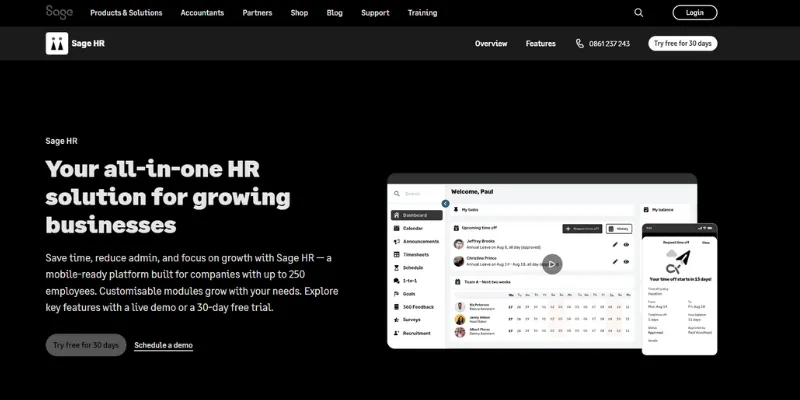
Best modular HR toolkit for growing teams
Demo available
Pricing: Modular; pay for what you need
Rating: 4.2/5
Sage HR is a modular HR platform that allows companies to implement core HR, leave management, performance, shift scheduling, and other components as they grow. It’s designed to be flexible and accessible for mid-sized organizations.
Sage HR offers a practical, modular approach for mid-sized businesses that want to modernize HR incrementally without committing to a large, monolithic HCM implementation.
Sage HR is a fit for mid-sized organizations that want a simple but flexible HR toolkit they can expand over time, focusing on core processes first and layering in performance or scheduling as needed.
Best for advanced global HCM needs
Demo available
Pricing: Enterprise-style custom quotes
Rating: 4.4/5
SAP is a mature HCM suite used by larger organizations and increasingly by high-growth mid-market companies. It offers extensive capabilities across core HR, performance, learning, succession, and workforce planning.
SAP is included for mid-sized organizations that already operate at a high level of complexity or are tightly aligned with SAP ecosystems and need advanced, globally scalable HR capabilities.
SAP is most appropriate for mid-sized companies with complex global structures or tight SAP integration requirements that justify an enterprise-grade HCM.
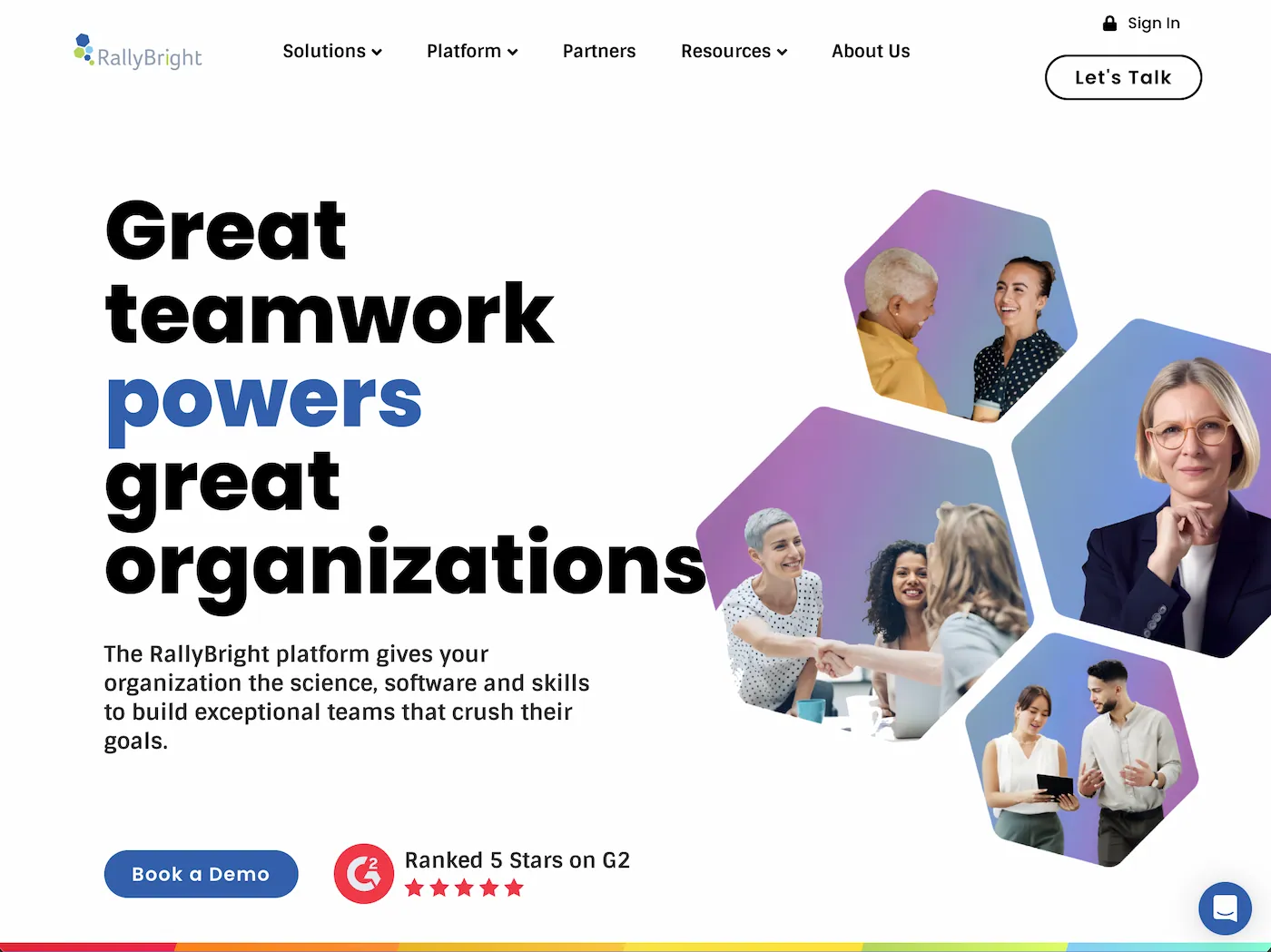
Best for team dynamics, culture assessments, and coached team resilience
Demo available
Pricing: Custom, based on team and organizational scope
Rating: 5.0/5 stars on G2 (Excellent)
RallyBright is a team performance management platform rooted in behavioral science that goes beyond traditional HR software. Rather than focusing on individual performance reviews or broad engagement surveys, RallyBright zeroes in on the team as the unit of measurement — diagnosing the hidden dynamics, conflict patterns, and trust gaps that prevent business line leaders from building resilient, high-performing teams.
Its flagship Resilient Teams™ assessment, built on over 20 years of organizational research, measures and benchmarks team capabilities across five core dimensions: Direction, Connection, Attitude, Adaptability, and Performance. The result isn't just a score — it's an actionable roadmap that surfaces blind spots leaders often can't see, from psychological safety breakdowns to misaligned communication styles that quietly erode execution.
RallyBright earned its spot for offering something most HR platforms don't: a direct bridge between assessment data and real behavioral change, delivered through deep partnerships with both in-house HR practitioners and a certified network of third-party coaches and consultants. In an era where AI-driven disruption, hybrid work, and organizational anxiety are testing every team's ability to adapt, RallyBright gives leaders the science, software, and human support to actually fix what's broken — not just measure it.
RallyBright works very well for mid-sized organizations (but also very large ones - their business spans both) where team performance is the bottleneck — not HR administration. But, many times when the business leaders are looking for "HR software", it's team performance that they are really looking to improve. It's especially well-suited to companies navigating significant change (AI adoption, restructuring, rapid growth) where leaders need more than simple engagement scores that don't mean much. If your business line managers are struggling to hold teams together, resolve deep-seated conflict, or rebuild trust after disruption, RallyBright's combination of validated assessments and embedded coaching partnerships gives them a structured, science-backed path to get there. It's not about storing HR data — it's about fixing the human dynamics that actually drive results.
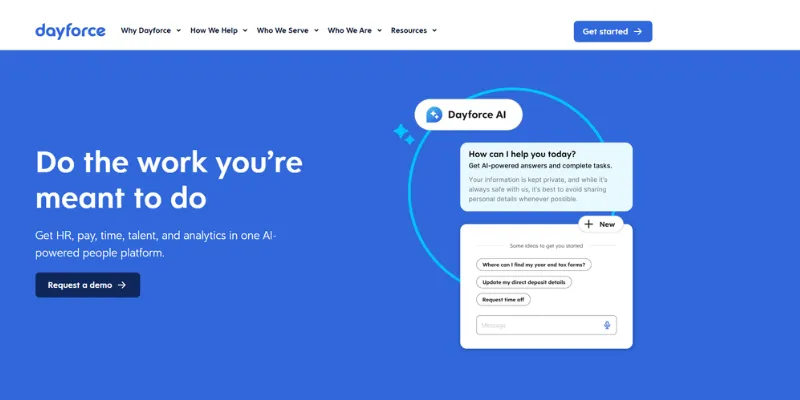
Best for unified HCM and workforce management
Demo available
Pricing: Custom
Rating: 4.3/5
Dayforce is a cloud HCM platform that combines HR, workforce management, and talent tools in a single system. It is known for its focus on continuous data and real-time visibility into workforce operations.
Dayforce is a strong option for mid-sized organizations that need HR and workforce management aligned, especially where scheduling, time, and operational oversight are crucial.
Dayforce is suited to mid-sized organizations that need tight alignment between HR and workforce operations, especially in industries with shift-based or labor-intensive environments.
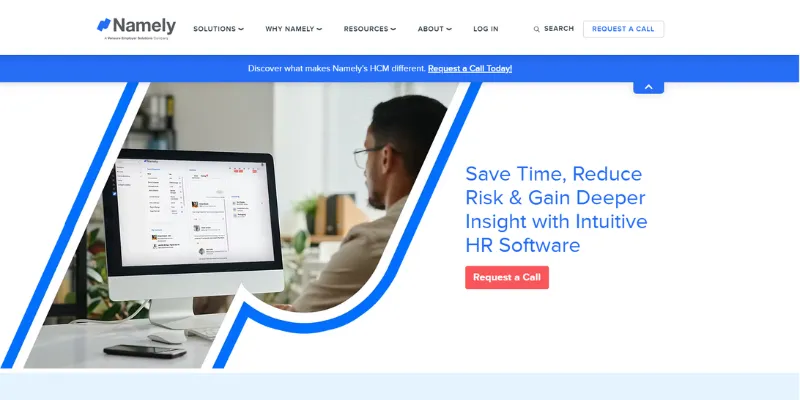
Best traditional HRIS for mid-sized organizations
Demo available
Pricing: Custom
Rating: 4.3/5
Namely is a mid-market HRIS focused on making HR administration and employee experience straightforward. It centralizes employee data, onboarding, time off, and performance in a familiar, user-friendly interface.
Namely offers a practical, traditional HRIS approach that many mid-sized organizations find accessible and easy to adopt without a steep learning curve.
Namely is best for mid-sized companies that want a straightforward HRIS with enough functionality to centralize HR work, but don’t need highly advanced or global capabilities.
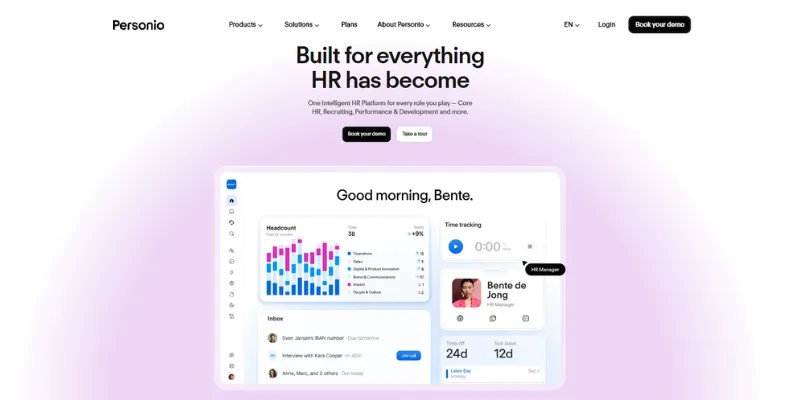
Best structured HR suite for European mid-market teams
Demo available
Pricing: From €3.50/user
Rating: 4.5/5
Personio is a comprehensive HR platform designed for European SMBs and mid-market organizations. It supports applicant tracking, onboarding, employee data, absence, performance, and HR workflows in a cohesive way.
Personio is one of the strongest HR suites for companies headquartered in Europe that require structured, compliant HR processes across multiple offices.
Personio is a good match for European mid-sized companies that want a centralized HR suite to standardize processes and maintain compliance across locations.
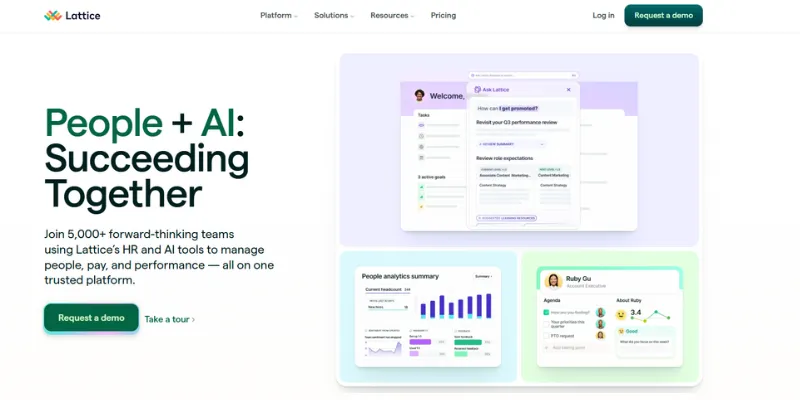
Best for performance, feedback, and employee growth
Demo available
Pricing: From $11/user per month
Rating: 4.7/5
Lattice is a people success platform focused on performance management, feedback, goals, and engagement. It helps companies create consistent management practices and development frameworks.
Lattice is one of the leading tools for mid-sized organizations prioritizing performance culture, structured feedback, and career development.
Lattice is ideal for mid-sized companies that already have an HRIS in place and want to significantly mature their performance, feedback, and development programs.
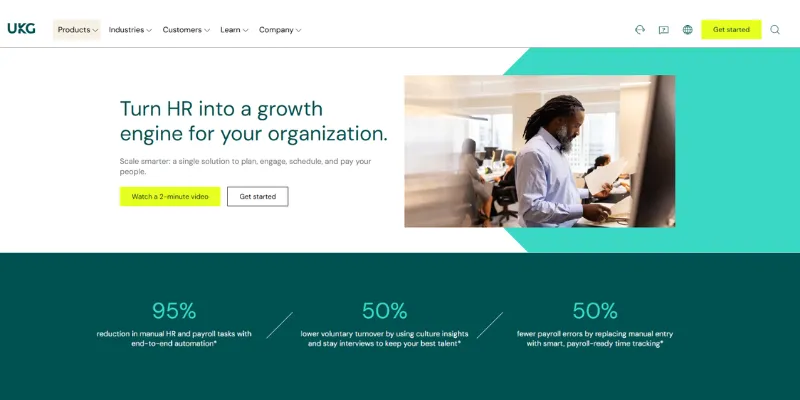
Best for compliance-heavy or shift-based environments
Demo available
Pricing: Custom
Rating: 4.2/5
UKG offer HR and workforce solutions tailored to organizations with complex scheduling, hourly workforces, and stringent compliance requirements.
UKG remains a strong choice for mid-sized companies where labor rules, scheduling, and compliance are as important as HR processes.
UKG is best suited to mid-sized organizations in sectors like manufacturing, healthcare, retail, or logistics, where scheduling, attendance, and compliance are central.
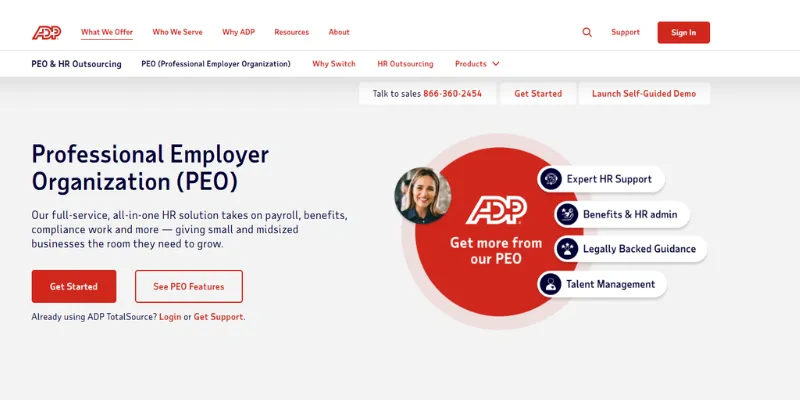
Best for HR teams needing strong compliance and control
Demo available
Pricing: Custom
Rating: 4.3/5
ADP is a long-established HR platform with deep compliance, admin controls, and reporting. It’s widely used by mid-sized organizations that want reliability and control over HR processes and documentation.
ADP is included for mid-sized teams operating in regulated environments or those that prioritize legal and compliance confidence.
ADP is a good fit for mid-sized organizations where compliance, documentation, and administrative control are key priorities.
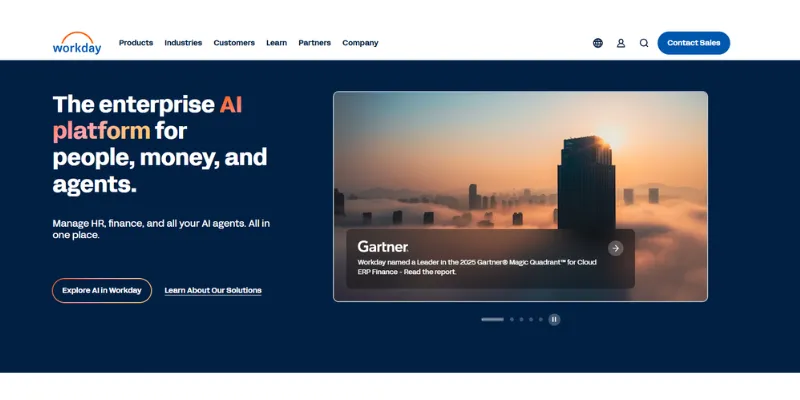
Best for complex or high-growth organizational structures
Demo available
Pricing: Enterprise-style custom quotes
Rating: 4.5/5
Workday is one of the most powerful HCM platforms on the market, supporting complex global structures, detailed job architectures, and sophisticated planning and analytics.
Workday is included for mid-sized organizations that either already operate at high complexity or are preparing to scale to enterprise levels and want a system that can grow with them long term.
Workday is best for mid-sized companies with complex, multi-entity structures or aggressive growth plans that justify an enterprise-level HCM investment.
Medium-sized businesses need HR software that can keep pace with growth, not just store employee details. The platforms on this list cover a range of needs, from simple workflows and modular tools to advanced HCM suites designed for global complexity.
If you’re looking for a modern, people-first HR platform that brings together operations, performance, engagement, and analytics in one place, HiBob is the strongest all-around choice for mid-market teams.

PST, EML, MSG, and MBOX are four different ways to package email data, and they don't work interchangeably. Here's what each one stores, where it comes from, and which tools open or convert it.
 Alex Boyd
PST files are Outlook's local email archive format. They show up in migrations, eDiscovery exports, and investigations. Here's what they contain, how to open one with or without Outlook, and why PST makes a poor long-term archive.
Alex Boyd
What EML files are, where they come from, how to open them on Windows and Mac, and how to convert EML to PDF for review or production in a legal or compliance context.
Alex Boyd