Best ISO 27001 Tools for 2026: Top Picks
Best ISO 27001 tools for 2026: Scytale, Drata, Vanta, Secureframe and more compared on pricing, automation, integrations, and which fits your team.
By Alex Boyd
Best ISO 27001 tools for 2026: Scytale, Drata, Vanta, Secureframe and more compared on pricing, automation, integrations, and which fits your team.
ISO 27001 compliance tools are specialized platforms that help organizations implement, maintain, and demonstrate adherence to the ISO 27001 information security management standard. In 2026, organizations increasingly rely on these platforms because ISO 27001 certification has become a baseline requirement for doing business with enterprise clients, particularly in regulated industries.
This comparison evaluates the leading ISO 27001 compliance platforms available in 2026, examining their automation capabilities, support models, framework coverage, and overall value proposition.
When evaluating ISO 27001 compliance platforms, several core capabilities separate effective solutions from those that create more work than they eliminate:
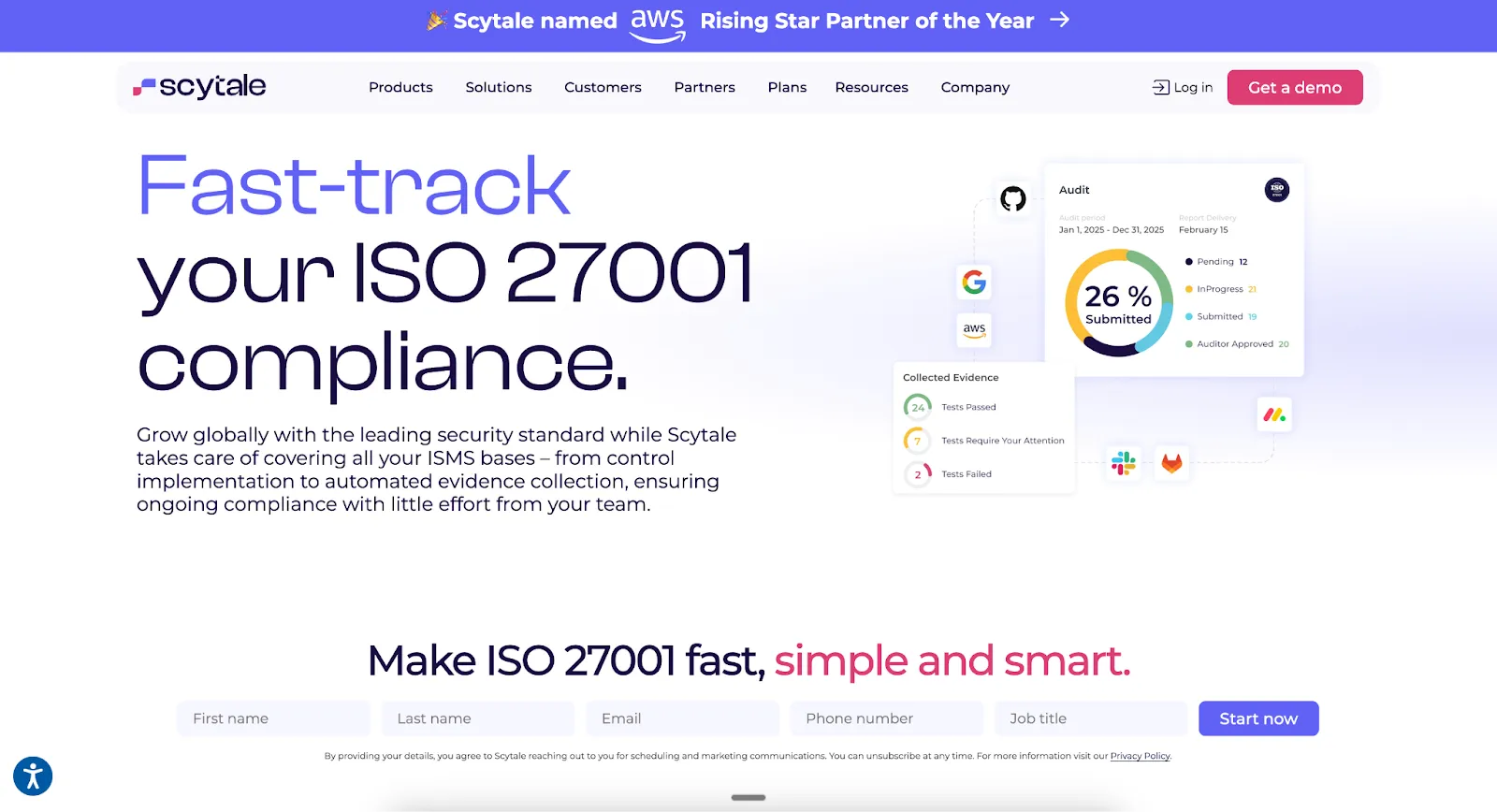
Scytale is an AI-powered compliance automation platform built by auditors for SaaS companies of all sizes that need the entire ISO 27001 certification process managed in one place. While most compliance tools rely purely on automation, Scytale pairs technology with expert advisory support. Every plan includes a dedicated team of ex-auditors who manage timelines, follow up on evidence, and keep compliance requirements on track so internal teams can focus on building products rather than chasing compliance requirements.
The platform organizes every phase of ISO 27001 compliance into a guided, centralized workspace that covers everything from initial gap assessments to the official certification audit and maintenance. The interface is designed to simplify what is usually complex, with progress meters, evidence tracking, and real-time notifications that make it clear what needs to be done.
What distinguishes Scytale from other platforms is its proactive advisory model. Rather than answering questions reactively when users get stuck, the dedicated ex-auditor team holds regular check-ins, runs the timeline, chases evidence, and proactively guides companies through every ISO 27001 requirement.
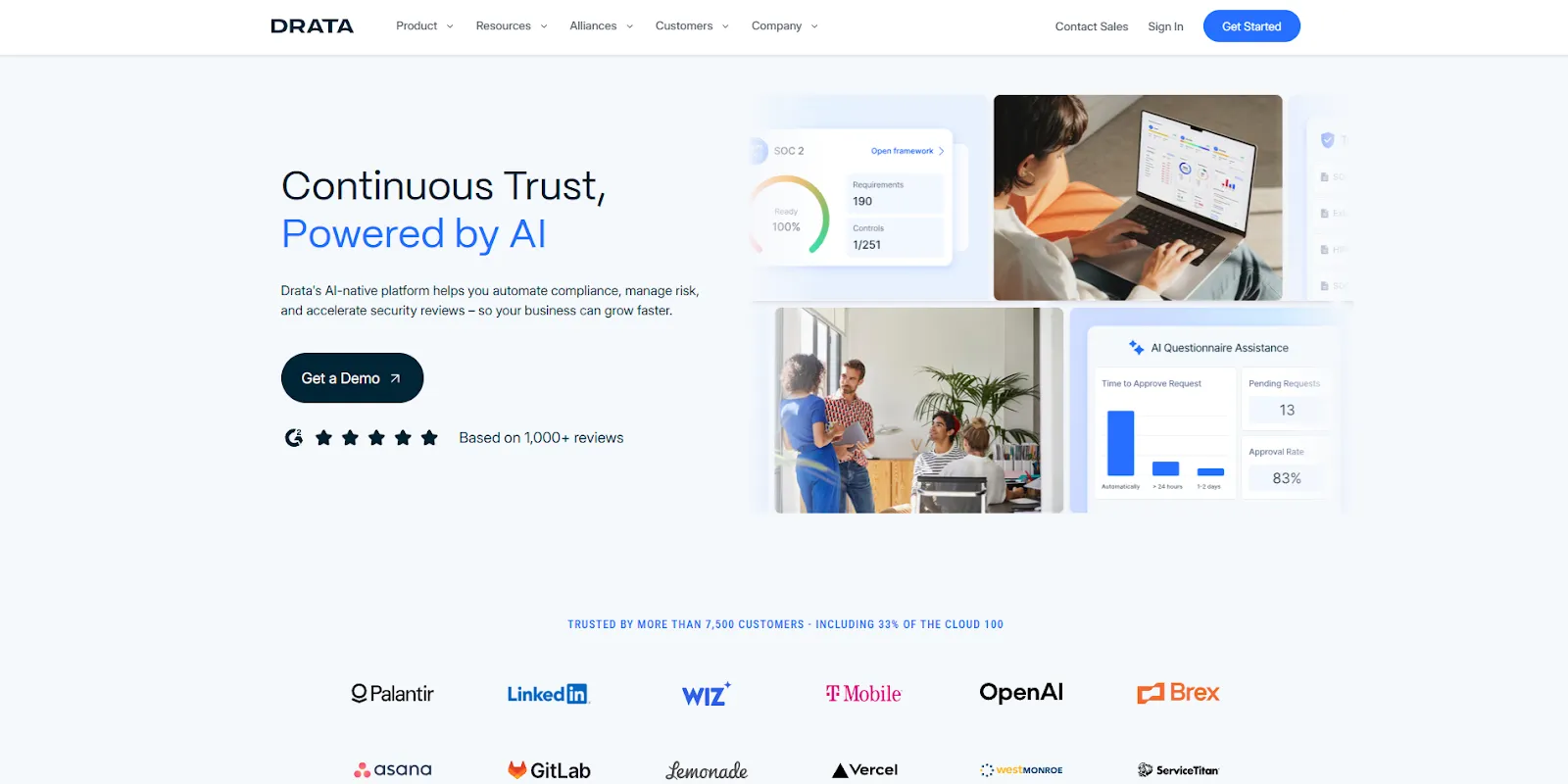
Drata markets high automation rates as its primary value proposition, claiming to automate 90 percent of compliance workflows through extensive integrations and automated evidence collection. The platform emphasizes reducing the manual burden of compliance through technology rather than human support.
Drata's automation capabilities reduce the time teams spend gathering evidence and documenting compliance.
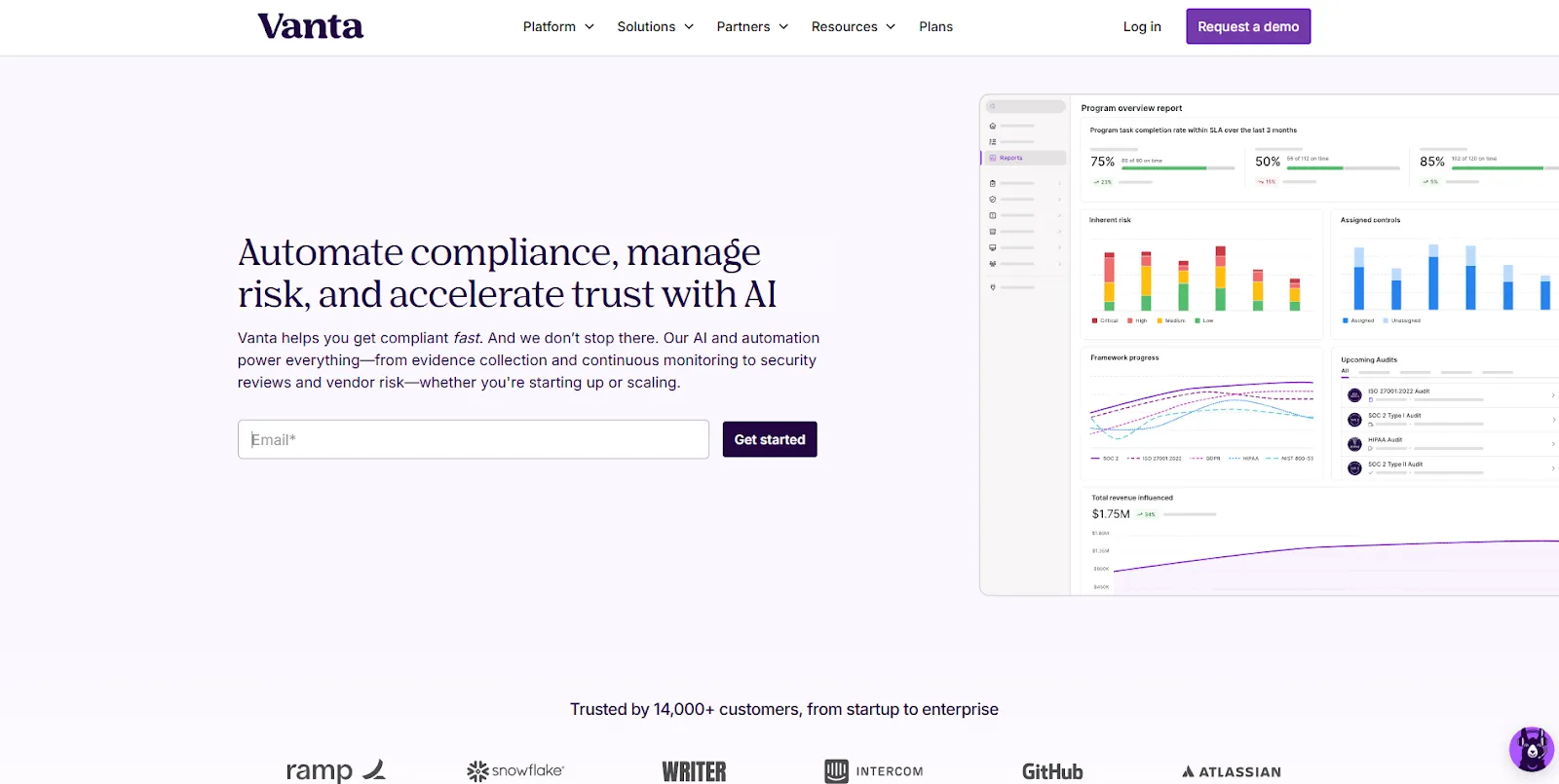
Vanta positions itself as having the most extensive integration catalog in the compliance space, marketing deep integrations with hundreds of tools across cloud infrastructure, identity management, development workflows, and business applications.
Vanta's integration catalog is the most comprehensive among compliance platforms, which benefits organizations with complex or unusual technology stacks.
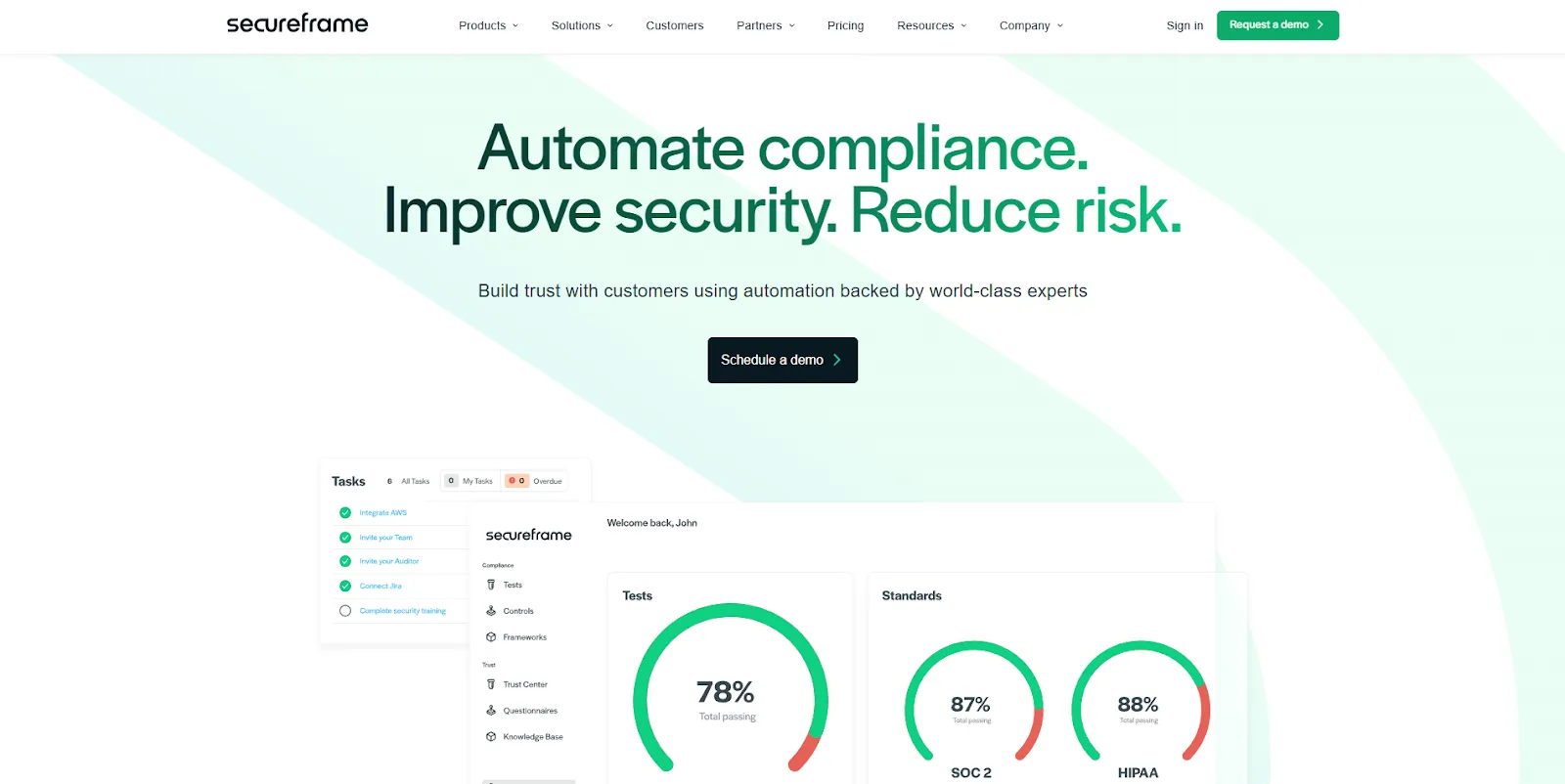
Secureframe positions itself as an automation-first compliance platform that helps technology companies achieve and maintain ISO 27001 certification through extensive integrations and automated evidence collection. The platform connects to a broad range of cloud infrastructure, identity management, and development tools to continuously gather compliance evidence without manual intervention.
Secureframe's primary differentiator is its broad integration library, which enables automated evidence collection from most tools in a typical technology stack.
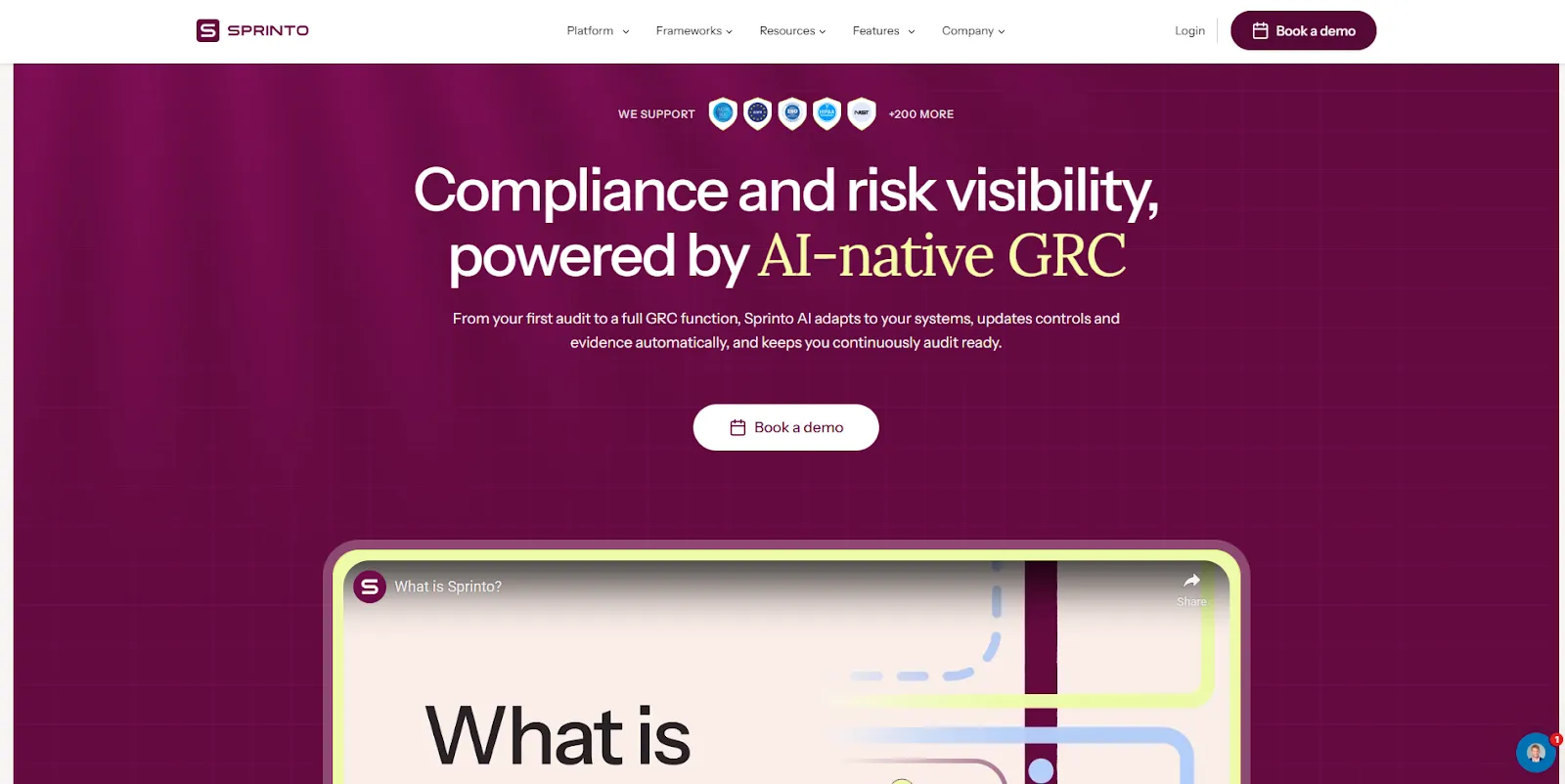
Sprinto is a compliance automation platform that emphasizes multi-framework support with particular strength in international standards. The company targets organizations that need to manage ISO 27001 alongside other certifications such as SOC 2, GDPR, and HIPAA, providing a unified dashboard for tracking compliance across different requirements.
Sprinto's focus on international compliance standards makes it particularly relevant for companies with global operations or those selling into international markets.
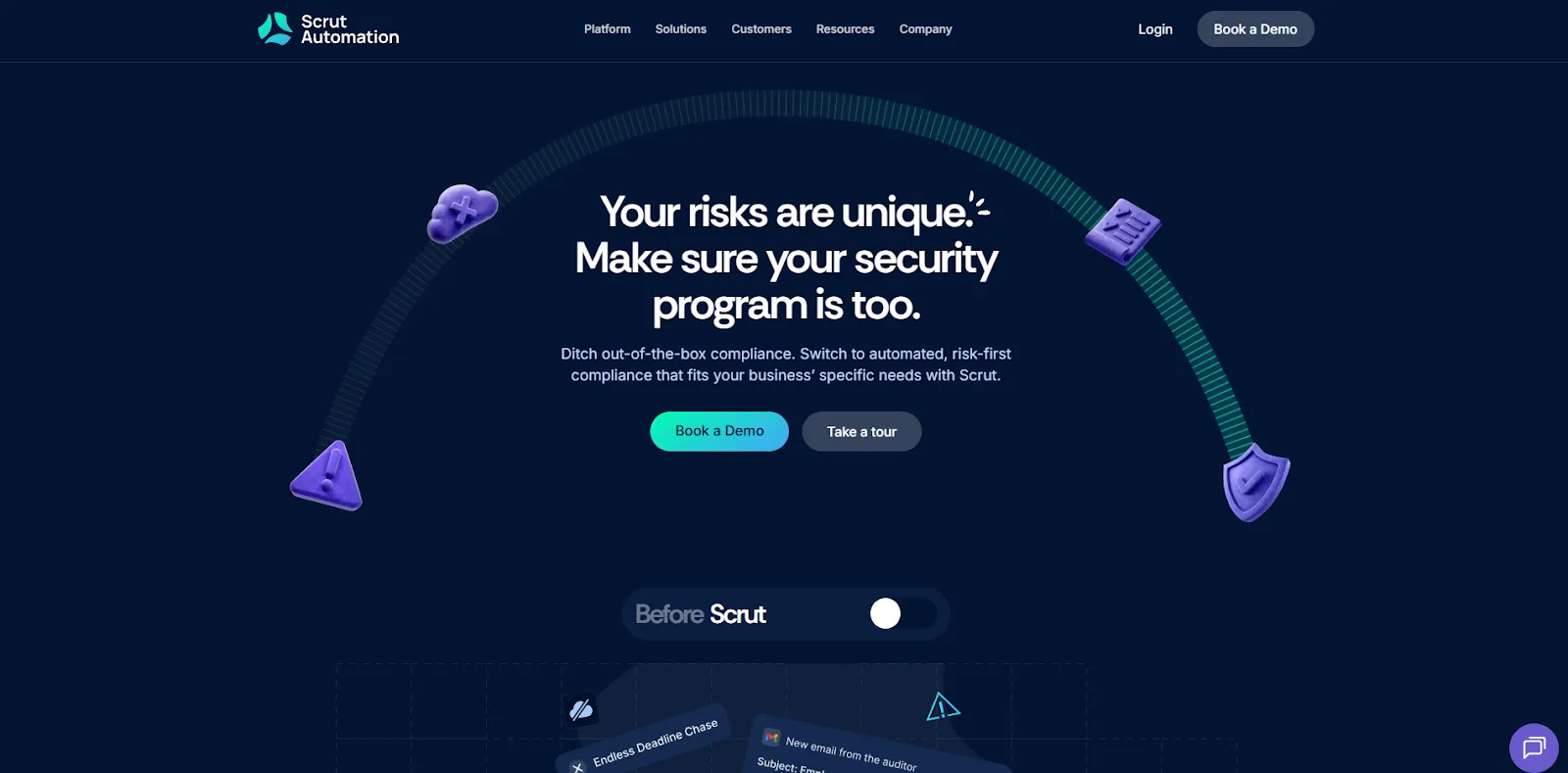
Scrut Automation approaches compliance from a risk management perspective, emphasizing detailed risk registers and risk-based control implementation. The platform is designed for organizations that want deep risk assessment capabilities integrated with their compliance workflows rather than treating risk management as a separate exercise.
Scrut's detailed risk management capabilities set it apart from more automation-focused platforms.
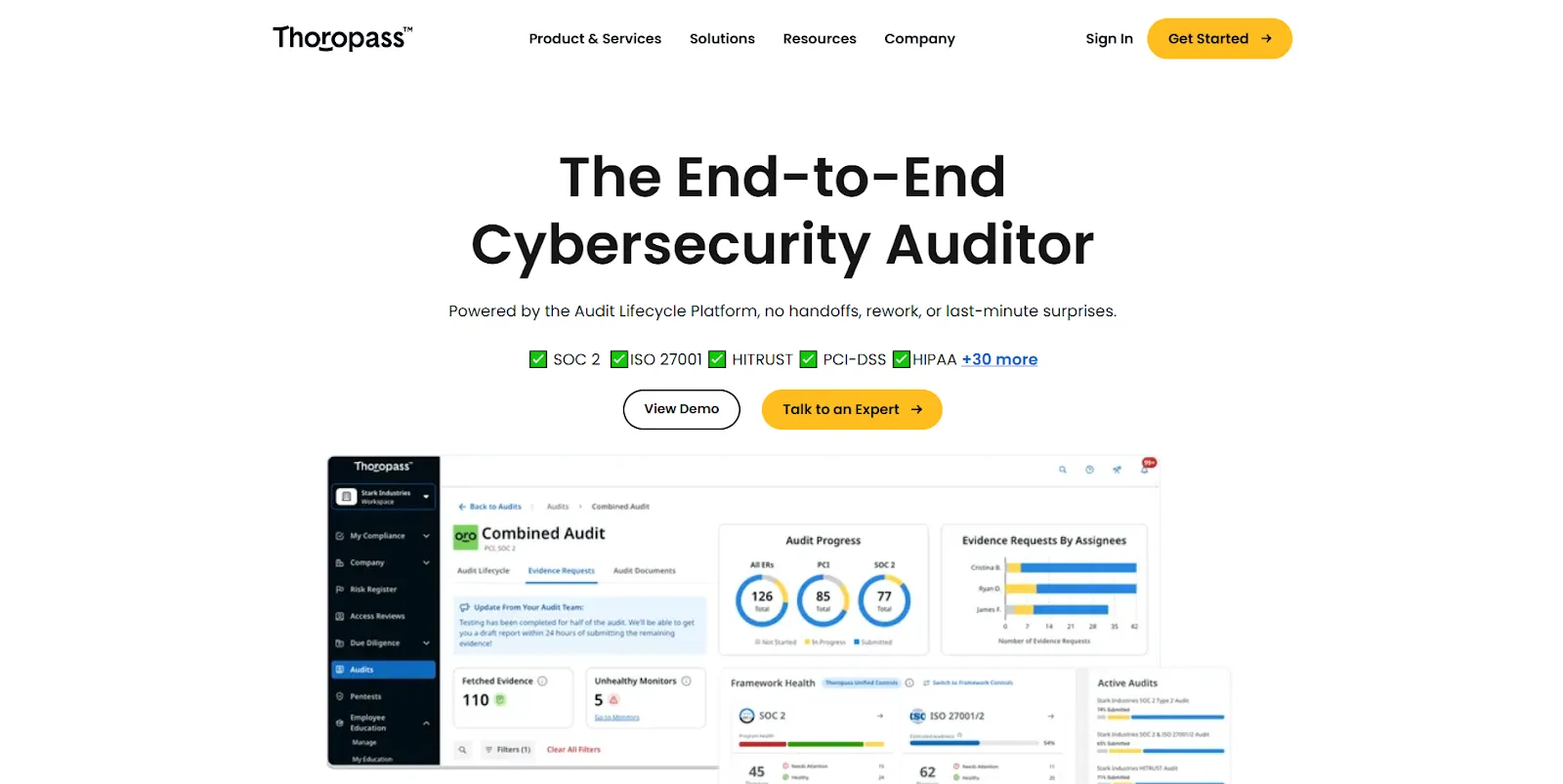
Thoropass integrates closely with partner auditing firms and penetration testing providers, positioning itself as a platform that connects companies with the full ecosystem of compliance services. The company embeds relationships with auditing firms directly into its product, making it easier for customers to engage the necessary external partners for certification.
Thoropass's integration with partner auditing firms simplifies the process of finding and engaging a certification auditor.
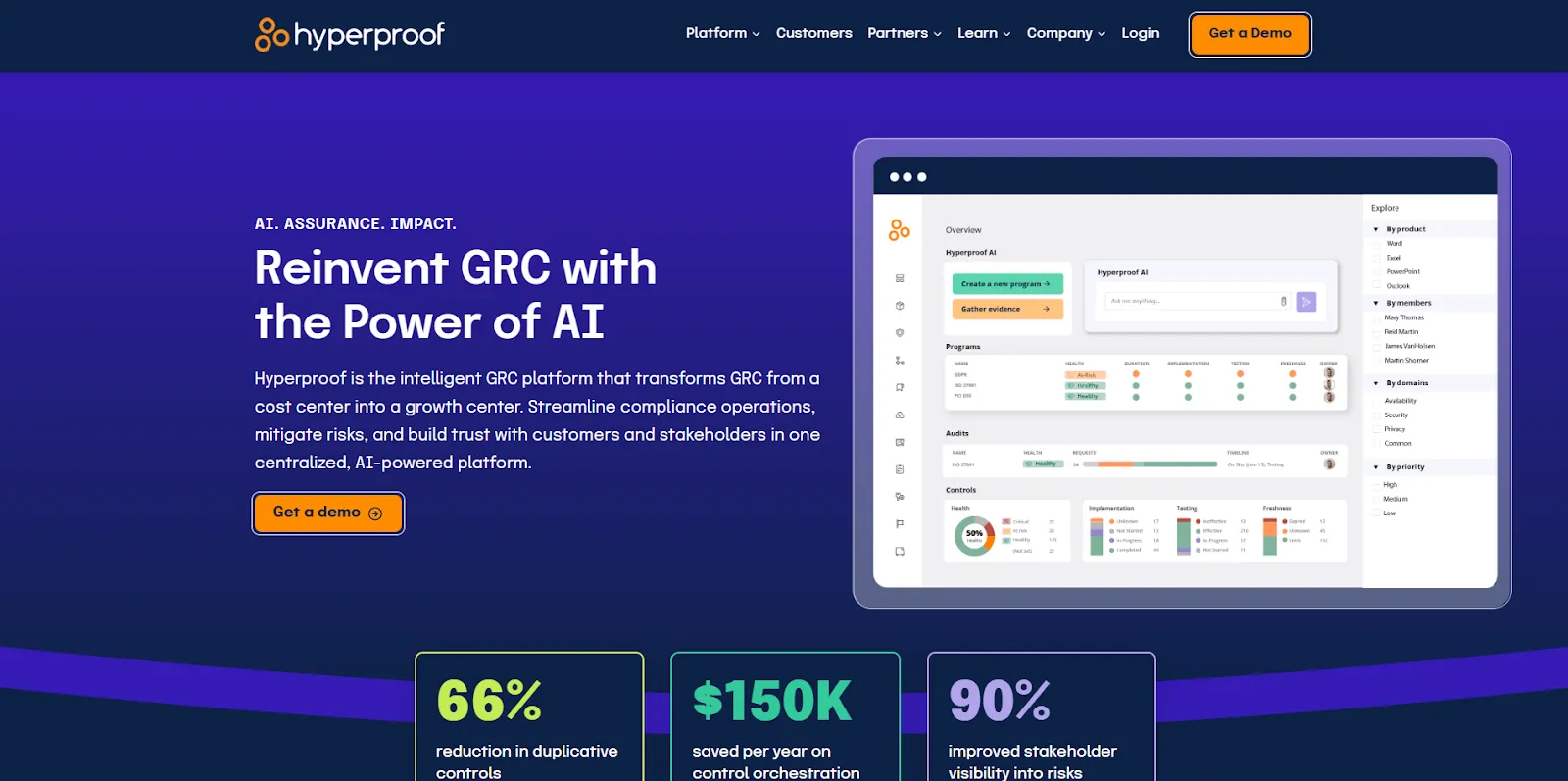
Hyperproof approaches compliance as an enterprise project management challenge, integrating compliance workflows with project management capabilities. The platform is designed for larger organizations managing complex compliance programs across multiple frameworks, teams, and business units.
Hyperproof's project management integration makes it well-suited for enterprises managing compliance as an ongoing program rather than a one-time certification.
Selecting the appropriate ISO 27001 compliance platform depends on several organizational factors that should guide the evaluation process.
Early-stage companies pursuing their first certification typically benefit from platforms that provide hands-on guidance and remove complexity rather than those designed for enterprise compliance programs. Larger organizations with dedicated compliance teams may prioritize workflow management and multi-business unit coordination capabilities.
Organizations without in-house compliance expertise should prioritize platforms that include proactive advisory support rather than those that simply provide software. Platforms built by auditors with embedded expert teams can make the difference between a smooth certification process and a frustrating experience of trying to interpret requirements without guidance.
Companies facing tight deadlines for certification may need more hands-on support to accelerate the process. Platforms that map controls across frameworks and avoid duplicate work provide value for companies planning to add ISO 42001, SOC 2, HIPAA, GDPR, or other critical frameworks. However, it is important to verify that additional frameworks are included in the base pricing rather than requiring costly add-ons.
Organizations should consider how the platform supports ongoing compliance, surveillance audits, and recertification. Platforms focused only on initial certification may create challenges when it comes time to maintain compliance and pass subsequent audits. The pricing model also deserves careful evaluation, as some platforms gate critical features behind premium tiers or charge separately for framework expansions.
The ISO 27001 compliance tooling landscape in 2026 offers organizations numerous options for managing their certification journey, each with different approaches to automation, support, and value delivery. The right choice ultimately depends on organizational needs, internal expertise, and long-term compliance goals.
Organizations pursuing their first certification, particularly those without in-house compliance expertise, typically benefit more from platforms that include proactive advisory support and reduce the complexity of the certification process.
ISO 27001 is an international standard for information security management systems (ISMS) that defines how organizations protect sensitive data. Companies pursue ISO 27001 certification to meet enterprise security requirements and demonstrate strong security practices to customers and key stakeholders.
ISO 27001 certification typically takes 3–6 months, depending on security maturity, scope, and internal resources. Companies using AI-powered platforms with built-in expert guidance like Scytale often reach certification faster than those relying on software alone.
Automated tools focus on key compliance tasks like evidence collection and control tracking but assume in-house compliance expertise. Platforms like Scytale combine smart automation with hands-on guidance from GRC experts, helping teams interpret requirements and close gaps throughout the certification process.
Yes. Many compliance platforms support ISO 27001 alongside other critical frameworks like ISO 42001, SOC 2, HIPAA, GDPR, and CCPA. Platforms with cross-mapped controls allow organizations to reuse evidence and avoid duplicate work when managing multiple frameworks.
Key features include automated evidence collection, continuous control monitoring, audit readiness workflows, and clear guidance on remediation. For organizations without dedicated compliance teams, access to experienced GRC advisors is often more valuable than automation alone.

PST, EML, MSG, and MBOX are four different ways to package email data, and they don't work interchangeably. Here's what each one stores, where it comes from, and which tools open or convert it.
 Alex Boyd
PST files are Outlook's local email archive format. They show up in migrations, eDiscovery exports, and investigations. Here's what they contain, how to open one with or without Outlook, and why PST makes a poor long-term archive.
Alex Boyd
What EML files are, where they come from, how to open them on Windows and Mac, and how to convert EML to PDF for review or production in a legal or compliance context.
Alex Boyd