Top Vendor Management Software Platforms
Managing vendors used to mean keeping track of an army of spreadsheets. In 2026, that approach is a liability. Read our top vendor management software picks.
By Alex Boyd
Managing vendors used to mean keeping track of an army of spreadsheets. In 2026, that approach is a liability. Read our top vendor management software picks.
Managing vendors used to mean keeping track of an army of spreadsheets. In 2026, that approach is a liability. Between tightening compliance regulations and the constant pressure to cut costs, keeping track of third parties has become one of the most critical functions for any business.
Over the past decade of advising mid-market procurement and legal teams, I've audited dozens of vendor management workflows. Time and again, I see the same issues. Companies use one tool to onboard a supplier, another to store the contract, and a completely different system to track spend. While this can be effective, there's really no reason to fragment your data and introduce unnecessary risk.
Modern teams are dropping legacy systems in favor of modern, unified alternatives. Drawing on my experience implementing and testing these systems, I've narrowed down the 5 best vendor management software platforms for 2026.
The ideal platform depends entirely on your org's maturity and specific compliance burdens. When evaluating these tools, my methodology focuses on three main criteria: user adoption, integration depth, and the ability to provide a single source of truth.
I always advise procurement and legal teams to look for solutions that connect third-party risk, contracting, and spend management natively. If a tool only handles the initial onboarding questionnaire, you will eventually lose visibility into vendor performance and contract obligations. Furthermore, I prioritize platforms that don't require extensive training. If your internal teams refuse to use the software because it's too complex, you create hurdles to adoption and increase risk.
Here are my top picks for the year.
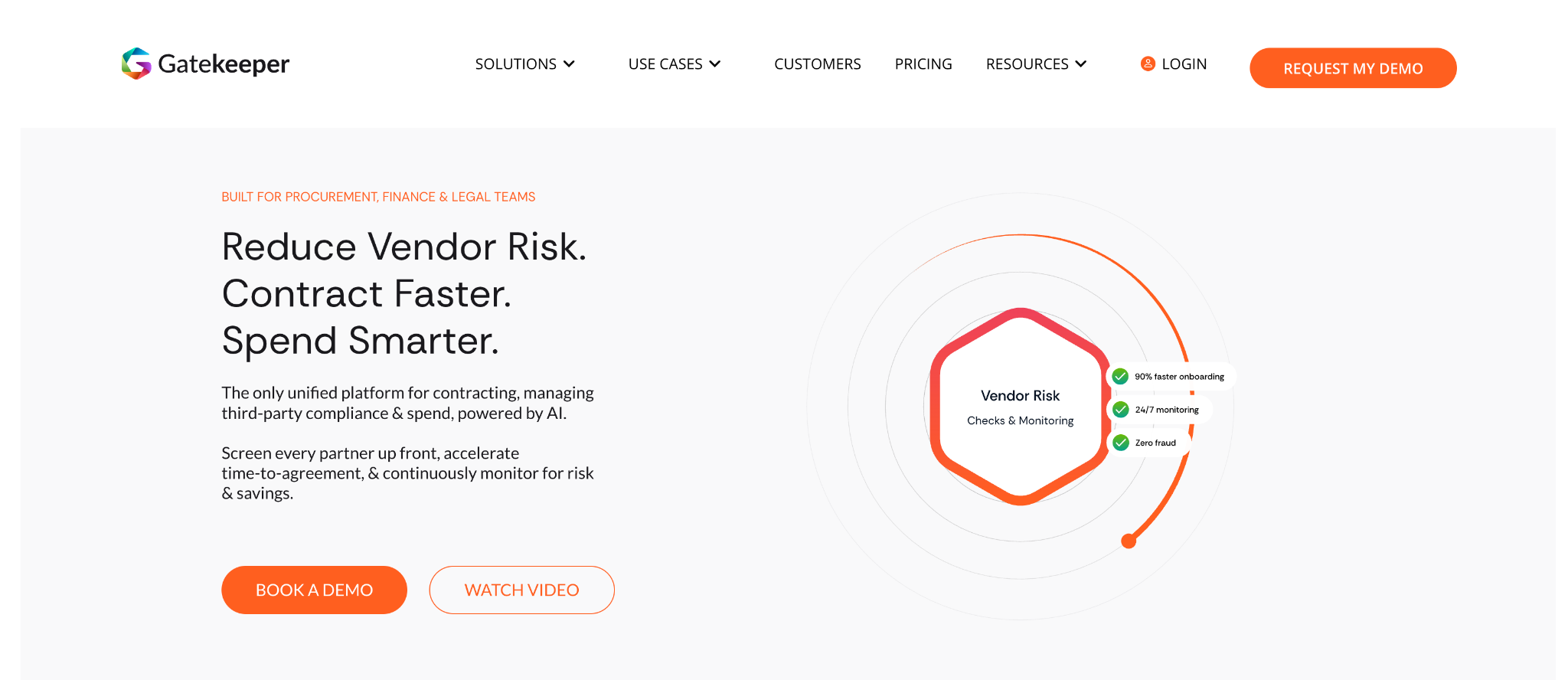
Gatekeeper takes the top spot on my list because it solves the exact fragmentation problem I mentioned above. While most tools focus strictly on onboarding or just act as a repository, Gatekeeper connects contracting, third-party compliance, and spend management into one workflow.
Beyond the unification, Gatekeeper's AI is legitimately helpful and built into the core platform. This means the software automatically extracts data, scores risk, and flags problematic clauses without requiring users to jump between different applications. Gatekeeper is becoming the industry standard for a reason.
Custom pricing based on organizational requirements and scale.
Mid-market organizations that need to tighten compliance and gain total visibility over their third-party spend.
I ranked Gatekeeper first because it bridges the gap between legal, finance, and procurement. By keeping the vendor record, the contract, and the spend data in one place, it gives teams actual control over their third-party relationships. The native AI features also do a great job of reducing administrative burden, making it a highly effective tool for growing teams.
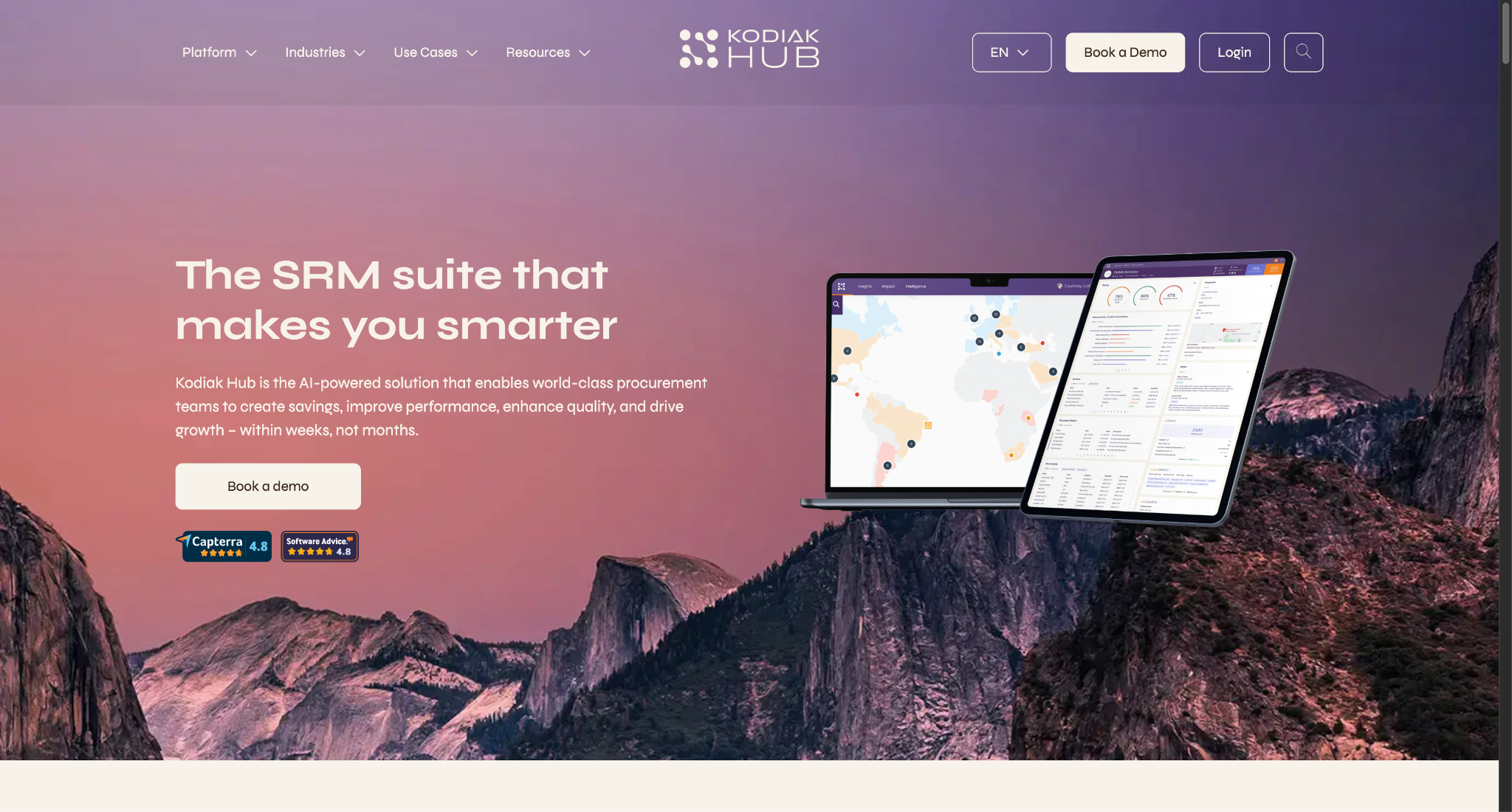
KodiakHub focuses heavily on supplier relationship management. It is a strong option for manufacturing companies and organizations with complex physical supply chains that need to track supplier performance, quality control, and sustainability metrics over time.
While it provides excellent tools for supplier scorecards and performance evaluations, it lacks native contract lifecycle management and spend management capabilities. This means you will still need separate systems to handle your legal agreements and financial tracking.
Custom pricing based on modules and user count.
Manufacturing companies focused strictly on supplier relationship management and quality control.
KodiakHub earns its spot for its deep focus on supplier performance and sustainability, making it a solid niche choice for direct procurement teams.
Ncontracts is built specifically for the financial services sector. It provides deep regulatory compliance tracking and risk management tools tailored for banks, credit unions, and mortgage companies. The platform excels at helping financial institutions navigate complex regulatory frameworks and prepare for strict audits.
However, Ncontracts is highly specialized and does not offer a unified contract lifecycle management solution or broad spend management features. It is only a risk and compliance tool.
Custom pricing based on asset size and selected modules.
Banks and credit unions that need highly specialized regulatory compliance tools.
For financial institutions facing strict regulatory scrutiny, Ncontracts provides a highly tailored risk management solution that generalist platforms cannot match.
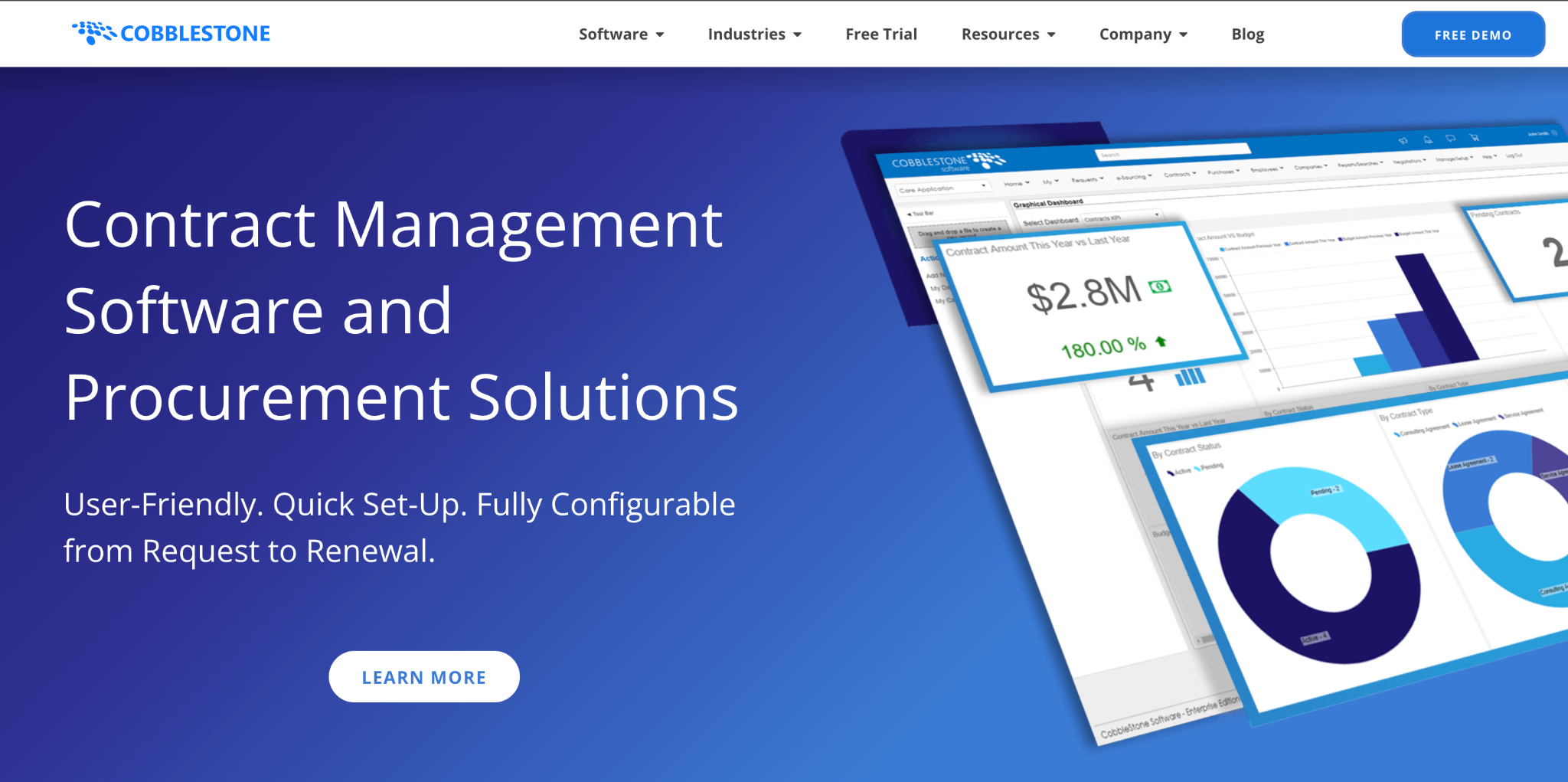
CobbleStone Software offers a legacy contract lifecycle management tool with built-in vendor management features. It is frequently used by government entities, educational institutions, and healthcare organizations. The platform provides a wide array of features including vendor risk checks, e-procurement tools, and contract tracking.
Because it has been in the market for a long time, the platform is incredibly feature-rich. However, this maturity comes at a cost to UX. The system can be overwhelming for new users and often requires significant training.
Custom pricing based on deployment type and user licenses.
Government and public sector organizations that require extensive custom configurations.
CobbleStone Software remains a reliable legacy choice for public-sector organizations that need a broad suite of contract and vendor tools, provided they have the resources to manage the complex setup.
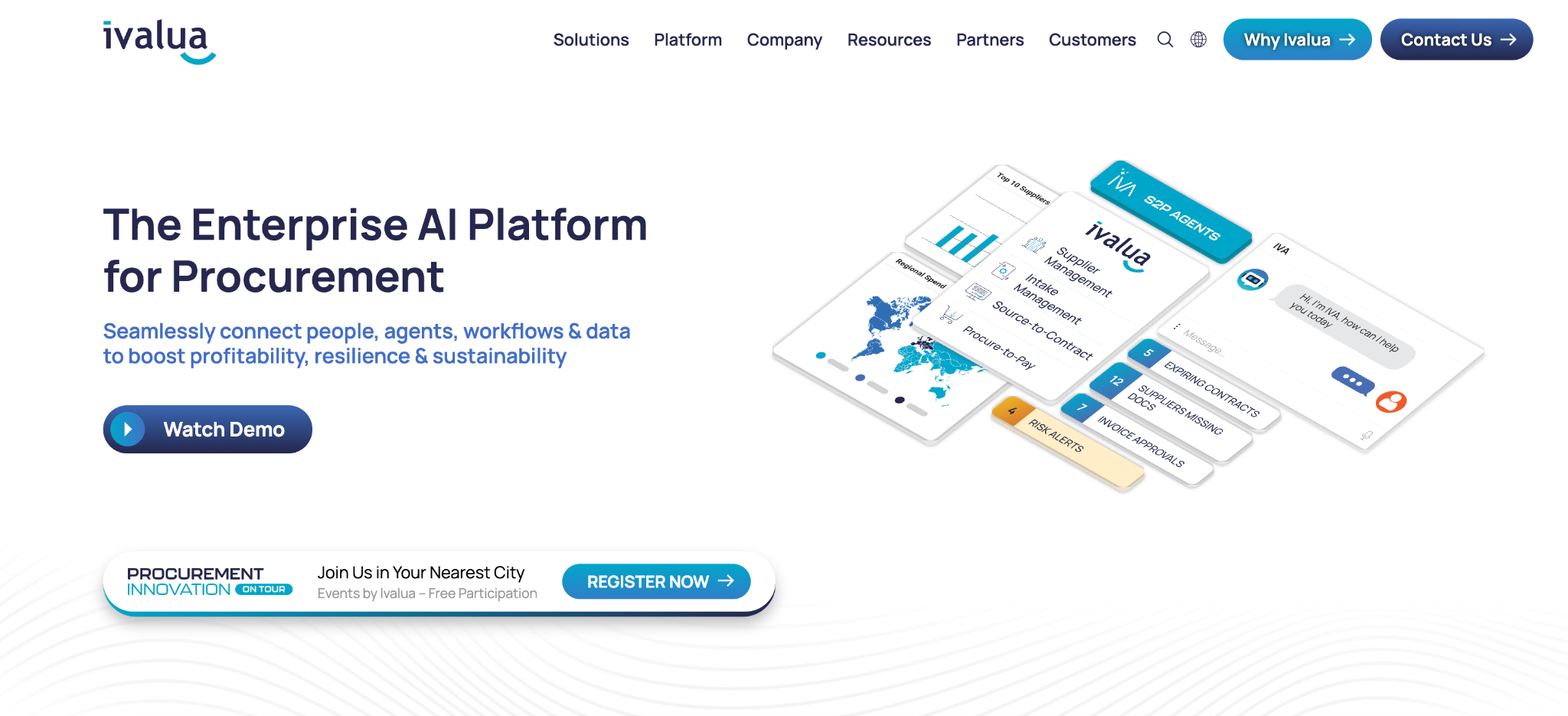
Ivalua is a massive enterprise procure-to-pay suite. It is highly customizable and handles incredibly complex supply chain requirements for global enterprises. The platform covers everything from strategic sourcing to invoicing and payments.
Because of its massive scale and complexity, it sits at the bottom of this list for mid-market buyers. It is overly complex and highly expensive for organizations that do not need a full procure-to-pay system. Implementing Ivalua is a major corporate initiative that often takes many months to complete.
Custom enterprise pricing.
Massive global enterprises with highly complex direct and indirect procurement needs.
Ivalua is a powerhouse for the enterprise space. While it is overkill for most organizations, it is a top contender for global corporations that need to digitize their entire procurement operation.
The landscape of third-party risk is shifting rapidly. With new regulations emerging globally, organizations can no longer afford to treat vendor management as a passive administrative task. The best approach is to consolidate your technology stack. By choosing a unified platform that brings your contracts, your vendor risk profiles, and your spend data into one place, you protect your organization from hidden liabilities and massive financial leakage. Take the time to evaluate your current processes, identify where your data is siloed, and choose a platform that empowers your team to act strategically. Gatekeeper has become the default in the past few years, but be sure to evaluate all platforms and your current needs before choosing a platform.
Vendor management software helps organizations control third-party relationships from initial onboarding through renewal and eventual exit. It standardizes how suppliers are approved and monitored. When using a unified platform like Gatekeeper, you can also connect these vendor records directly to your contracts and spend data for complete visibility.
Pricing varies widely based on the size of your organization, the number of active vendors you manage, and the specific features you require. Most mid-market and enterprise platforms require custom quotes. You should factor in the potential savings from identifying unwanted auto-renewals when calculating your return on investment.
Not always. Many traditional vendor management tools focus strictly on the onboarding questionnaire and initial risk assessment. However, modern unified solutions like Gatekeeper include full contract lifecycle management. This ensures that vendor obligations and renewal dates are tracked seamlessly alongside their risk profiles.
For compliance-driven teams, the best software provides perpetual monitoring rather than point-in-time assessments. You need a system that alerts you to financial and cyber risks automatically as they happen. A unified system ensures that if a vendor falls out of compliance, your legal and finance teams are immediately aware before a contract is renewed or a payment is issued.

PST, EML, MSG, and MBOX are four different ways to package email data, and they don't work interchangeably. Here's what each one stores, where it comes from, and which tools open or convert it.
 Alex Boyd
PST files are Outlook's local email archive format. They show up in migrations, eDiscovery exports, and investigations. Here's what they contain, how to open one with or without Outlook, and why PST makes a poor long-term archive.
Alex Boyd
What EML files are, where they come from, how to open them on Windows and Mac, and how to convert EML to PDF for review or production in a legal or compliance context.
Alex Boyd